

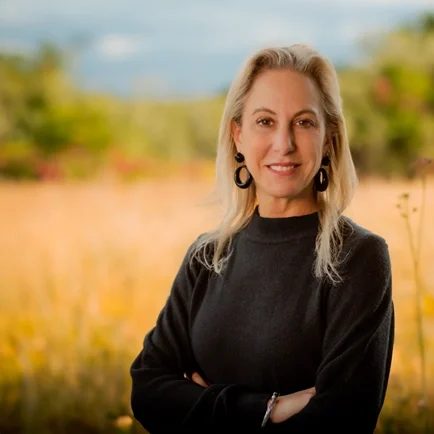
CLD: I remember when I began reading Organ Language without knowing who wrote it (I read blind) and therefore unawares of your specific legacy as a writer and creative, I had thought to myself “this person understands the natural world we live in, in a way that’s rarefied.” There is an astonishing simplicity to the purpose of your writing, but it’s evoked through a plethora of natural images—with each of these exquisitely crafted poems so well considered. Whilst that’s not uncommon among the better poets, it was a collection that immediately impressed me for the obvious time and talent invested in each poem. With your many achievements in varied subjects, and a full-to-brimming life, how do you ensure your writing retains that extra layer of quality with everything you write?
JK: Oh my, I think I might be blushing as I answer this! I certainly don’t think I have any superpowers in observing nature. I think it’s life experience that brings me closest to it: namely, living for almost 20 years on the last remaining acre on a historic mango grove, then moving to a bird sanctuary where we live now. Parts of Miami were first developed as tropical fruit farms: coconuts, pineapples, mangoes. Others were planted with ornamental trees and bushes from all over to see what grew best. Remnants of those endeavors still appear in a lot of the region. For instance, Mango House was originally built in the 1930s for the mango pickers. When we arrived on the scene, we thought, “Great! Fruit trees!” We literally had no idea what it was like to care for 14 mango trees, three avocado trees, and a variety of others—and of course I planted even more, ranging from bananas to cacao to guava, in addition to a garden that I literally dug out of oolite. I had the idea that the more, the merrier. I always approached my work and home life the same way—sure, I could handle raising two kids, six cats, three dogs, the occasional chicken or rabbit (and once, memorably, a domesticated fox for three very long days) while also teaching and freelance writing full-time, handling thousands of pieces of fruit weekly, and making mango products to sell at farmers markets. No sweat. Well, in the end, it was a lot of sweat. Mangoes wait for no one to pick them; they’ll just drop when they’re ready, even if it’s on your head as you’re walking under them. And the bad ones—the squirrel-bitten ones, the sap-burned ones, the half-formed ones—they have to be collected, too, or your property smells like rotten vinegar and the neighbors complain. But with this extreme kind of labor came a richness of hands-on observation that I would translate into my poems. And sometimes, like mango season, I was flooded with them, and at other times, I was not quite as fertile—but that’s when I would revise for craft. So while this book wasn’t directly born from tending the mangoes, as my last one was, I think life on a mango grove taught me how to value abundancy when it appears, and how to savor the leaner times as well—that all seasons are meant to be appreciated for a reason.
CLD: There are so many things we could talk about in this electroacoustic collection, but I wonder if you might discuss your use, and creation, of form. I can see your investment in the tradition of writing poetry, through your knowledge of form, and I see how line becomes an operative formality that you work within, yet it never seems to constrain you, which is why I think your poetry is so remarkable, you own form, not the other way around. Can I ask how you achieve this, given it’s a struggle for many seasoned poets to ever break free of that formal constraint and write within form as if they were not?
JK: I’m so glad you asked me about form, because I feel so differently about it than many poets I know, who never or maybe reluctantly use it. Or who try it only when they’re prompted or feeling stuck. I’ve had other poets read my work who sometimes (with the best intentions) ask, “What would this look like if you took it out of a sestina or villanelle or sonnet?” And my answer is always, “It wouldn’t look like my poem.” That’s just not how my mind operates. Form isn’t a suggestion that might or might not help the poem come into existence. It’s already a reality for the poem, the outer shell of it, the way that our flesh and skin is the outer structure for all the important stuff that’s really going on in our bodies. I remember one of my first mentors, the late Deborah Digges, teaching Elizabeth Bishop’s “Sestina.” She said that if you ignore the title, the reader doesn’t realize until they’re halfway through the poem that it’s a repeating form. So that’s the way I approach form, as a transparent vessel that shapes the words as invisibly as possible. My poems always start with the subject and a phrase—maybe the title, maybe the first line or stanza of the poem—but as soon as that becomes as a solid reality in my head, I’m thinking about what container is the best one for this subject. Then, how can I make it as translucent and malleable as possible. And to be clear, I consider free verse a form as well, and sometimes that’s the best container. Or the best container might be a combination of two or three forms, or a form that hasn’t been invented yet, so I write it into existence.
CLD: The color of your writing, the location, it feels at times reading you, that one is transported to where you are, able to breathe the same air, visualize the same things. I imagine where you live in terms of aesthetics, plays a large part in your inspirational process, and what you are drawn to in terms of writing. Have you found that this nod to the beauty and aestheticism of the natural world is essential in your writing?
JK: Certainly, it’s easy in Miami to be immersed in the natural world—it’s all around you, even though it’s an urban metropolis in all the ways from traffic to pushy tourists—via water and wildlife. In every situation, you encounter something surprising, from peacocks on your roof to iguanas in your pool to manatees in the river. And everything is so exaggerated here, as it is in other tropical places. It’s nature on steroids: big, copious, overflowing. I’m not sure how much I’m consciously trying the replicate place or transport the reader. But I am definitely a poet whose poems are born of and from this place. Having lived here since my early 20s, I’ve absorbed it like a kind of collective knowledge, and it thrives untended in my subconscious wherever I go. I’m so lucky as a poet and writer to have this kind of joyful coloratura right outside my windows.
CLD: Your form is again and again, quite exquisite, at times the structured stanzas and layered interplay—are literally transportive, such as the opening poem ‘Left (左側)’ a striking (and outlaw!) tanka-prose, whereby whilst at the interactive kinetic orchid exhibit in the Japanese art-tech museum, you find out your son is a match to donate his kidney to his friend. ‘Organ Language’ is primarily focusing around this kidney, the love for your son, in relation to so much else, that it opens up kaleidoscopically to larger considerations and then returns to the key theme, like in the lines: “I am thinking about my son’s hook of an organ, a singular Dracula orchid blooming out of dormancy, about Zhao’s pupil Nanquan pointing out its intoxicating function.” You don’t lose the reader by the multiplexity of your references because the subject remains foremost, a less nuanced poet might have or risked sounding pretentious. It takes a natural linguist to achieve this complexity, without appearing over-complex, which is another valuable element within your writing style. You also say “his orchid garden and I are one” in the same poem, which I thought was a brilliant tie-in (organs/love/nature) that extends the very interior plight of organ-transplantation with something larger. When you began writing this collection specifically, was that the intention? Or did it come about unconsciously?
JK: I started writing poems somewhat aimlessly, after finishing two other manuscripts, around 2022. That’s also the time when my dear friend and SWWIM partner Catherine’s son Austen was battling a rare kind of pediatric brain tumor in his brain stem. My husband, a neurologist, was the one to diagnose it. I think Jon and I have never felt more horrified and helpless, being on the sidelines of this terrible impending loss. The poem “Too Brief Again, This August Light,” speaks directly to that. And even though I’ve been with Jon since his pre-med days and have been exposed to all sorts of medical language and tragic diagnoses, it was then that I started thinking obsessively about the brain. But the poems I was writing really didn’t fit together until the topic of organ transplantation arrived at our doorstep.
My son, Remy, had just graduated undergrad, my daughter had just graduated with her master’s degree and, after taking a trip to Japan and spending the summer with us, both were moving out—him to Austin, her to Tampa. In my mind, they were going to the left direction-wise, and also we were being left, for the first time, as true empty-nesters. We simultaneously learned that Jacob, a friend of the family that we had known since he was five or six, urgently needed a kidney. He had gotten e. Coli way back when, and his kidneys had failed, and eventually his mother Jennifer had donated her kidney to him. Now, at the same time my children were going to start their (hopefully wonderful) adult lives, her kidney was no longer working for him. He was critically ill again, not leaving but returning home.
I think Remy felt that juxtaposition acutely. But the timing of his donation certainly played a role, because suddenly he was not needed at his job until January. So he had some months before he had to move. Being a universal donor, he went and got tested and tested and tested. Eventually, we learned he was the best match for Jacob. As a mother, I was so proud of my son for being able to give this gift of life to another son and his mother. We were also thrilled, as we were watching the surgeries, when Jacob’s new kidney started working as soon as it was attached–so well, in fact, that he couldn’t even keep up with drinking enough fluids for a while. It’s a beautiful bond now between the two young men, and a wonderful connection that we will also always cherish with Jacob and his parents. It was just a tremendously positive experience all around. But as a poet, of course, I was fascinated by the whole process, and I did a lot of reading and studying about kidney (and other organ) transplantation. When I learned that they would take his left kidney, well, that coalesced into the first poem, “Left (左側)” in the book that I was writing, which I shortly came to realize had a lot of actual organs in it—kidneys, brains, hearts, the gut, the skin—and metaphorical organs, such as musical instruments and flowers.
CLD: In the poem ‘Steaming the Wallpaper, 1973,’ a favorite of mine, I was drawn to your evocation of time, combined with the grief of watching your mom battle Alzeimer’s. You achieve this in such a low-key way, removing all the gadgetry of poetry and speaking quite plainly in the lines: “back in the days when a kitchen / was a heart, its double arteries shuttered / even when left ajar, never fully open.” What exploded here for me is the palpable imagery of a kitchen as heart of (a family) speaking to loss without naming it. You use objects, memories, totems, to describe the interior in a way that is every bit as emotive as any direct method but done with greater poetic alacrity. Do you see ‘Organ Language’ as being primarily the story of your son’s kidney transplant, but also your own journey through your mother’s diagnosis? Do you think organs have a language in the way they speak to us, affect us, and ultimately determine our outcomes?
JK: I originally had some poems in Organ Language that spoke very directly to Alzheimer’s Disease. I replaced them with other work because my parents were adamant about keeping my mother’s condition a secret; Jon had diagnosed her, but she had not been formally seen by any of her doctors. My parents also had no aides or help in the house, although they should have. I wanted to respect their wishes. But I left in the poems that referred to her disease obliquely, that they weren’t going to get at the undertones of.
In that particular poem, I have a vivid memory of my mother, who was a very dynamic, DIY, and intelligent woman, removing layers and layers of wallpaper from the kitchen walls. Back then, we had kitchens with swinging or accordion doors—none of this open floorplan stuff—and we would take the wall-mounted telephones and stretch their cords outside the kitchen, close the doors, and believe we had a little privacy. So it’s a poem about physical loss, and the impending loss of her selfhood, but also the loss of innocence.
I do see the narrative arc of the book to be largely about Remy’s donation. But I think it’s also about what various organs do, and how they function, and what happens to us when they malfunction. In this way, it also leads directly to what my next manuscript is quickly becoming about, which is where those poems about dementia have gone.
CLD: Like you, I have always cherished Sexton and Plath’s writing as beautiful despite the grief and ultimate tragedy of their lives. In the poem ‘Theoretical Conversation Between Two Poets Who Died by Suicide, on Whether Time Heals’ you use the first line from a Sexton poem and the last line from a Plath.
“Who knows what scent is released by the hour
from the sweet, deep throats of the night flower?”
It reminds me, that both Plath and Sexton are not remembered simply because they died by suicide, or spoke to women’s frustrations of an era, especially when both were relatively socially safe compared to so many women after them. I think they are remembered for the cleverness of their lines and their beauty, which people may not immediately expect, given the larger identities of queens of poetic suicide. What I like here is how you imagine a conversation, and in so doing, you rebuke this stereotype of them. I loved this poem, but it was quite unexpected in the collection. What were your thoughts on writing it and how does it fit with the themes of ‘Organ Language’?
JK: I wrote this poem while in residency at Centrum, located in Washington State. One of the things that I like to do at residencies, which I can’t always do at home, is to take generative workshops and attend virtual readings for nourishment and stimulation. This poem came out of an online generative workshop taught by my dear friends Caridad and Nicole while they were sitting in the lobby of the stunning Betsy Hotel in Miami. I was recalling, at the same time, stories that another mentor of mine, the late Maxine Kumin, had told me about both Plath and Sexton—she was their colleague—and it really demystified their aura as well as their work for me.
Still, I likely wouldn’t have included this poem if two tragic events hadn’t taken place the following year. In March 2025, my brother-in-law Bill died by suicide using a gun. The following day, my husband’s lifelong friend, Marjan, did the exact same thing. This double tragedy, along with a suicide committed by another writer friend named Jennifer a few years ago, spawned a few poems in Organ Language (“Lament,” “Sonnenizios to Bill and “Details from ‘Sonnenizios to Bill,’” and “Directional After the Turn of the Year”). Because of all these sad coincidences, it seemed appropriate to add the Plath/Sexton poem after all.
CLD: As a science geek I was aware transplant-recipients of organs can begin to crave things that are associated with the organ’s genetic owner, which is fascinating. You write in the eponymous ‘Organ Language’ :
“After my son donates his organ,
his friend starts to crave the blood-hot advance
of black-and-blue steaks, the ruddy heaven
that all our hearts make.”
I’ve read collections about getting a transplant but not of witnessing one’s child giving an organ. In many ways this is the ‘language’ you speak of in the title. Did you struggle with this when you were first told of your son’s plans? Did it conjure challenges for you as a mother and human, that fought with each other at times? I would imagine for most of us, as parents, we’d have some internal strife or even rage at the fears of (a child giving an organ that they may one day require) especially if we have some knowledge of the fragility of life. How did writing these poems reconcile that for you, if at all?
JK: I had a lot of big feelings about my son’s decision, but mostly I was impressed by his altruism and his bravery. Naturally, all surgeries carry some risk, so my husband and I were nervous about that. And not all of our relatives agreed with his decision to make a donation like this at such a young age, but in the end everyone was, if not on board, at least considerate enough not to voice their objections. We also allowed him room to change his mind. We and all the doctors involved told him he could ethically back at any time without questions. We never even told the Silverman’s that he was being tested until we learned he was a match.
Writing this collection was like the matching process itself. One test at a time, one poem at a time. Let’s see where it leads. And here are the results. In the end, Remy recovered remarkably quickly and well. Jacob is in law school, thriving. Hopefully, readers will take these poems as how positive an experience it is to donate a living organ.
CLD: You’ve given me such a renewed love ofsonnetals,thanks to your humor and fierce intelligence when constructing them. I laughed aloud reading ‘Reverie as the Earth in the Key Signature of Anthropocene,’ where your final lines just zinged with the kind of informed, bright acuity we badly need today:
“I’m Earth—that empress with no clothes to exchange.
Men give my grief many names, but plus ça change.”
You’re an eco-warrior, but not in a traditional sense. It is in your insightfulness and the quixotic intelligence of your writing we find persuasion. This is so refreshing in a world saturated with social media rants. Do you think, cliché or no, this is something that comes with insight borne over a period of time? Could you have written this twenty years ago in other words?
JK: I care deeply about the environment, but to be honest, I don’t have the physical energy to be an activist. Among other conditions, I have three autoimmune diseases, so fatigue and chronic pain are frequent visitors. This is my way of making my voice heard. But writing a political or social justice poem without it being a screed is a difficult job, and I don’t think I would have been able to do it without the consistency of both living with the climate changes—we saw these so clearly on the mango grove, where some years we had crops beginning in May and other years in July—and the long years of practicing the craft. So yes, I do believe a lot of this work comes from the dedicated experience of studying, writing, reading, revising, teaching, throwing it away, fishing it out of the trash, smoothing out the wrinkles, and bringing it back. Rinse and repeat.
CLD: Another poem ‘Lineage’ really stayed with me, the idea of your grandmother’s bracelet made from such a soft gold; “that it captured the plush oval / pad of one of her fingers, pressed / into the bracelet while she secured / the catch” It’s such a simple image, but the story woven around it, anything but, and speaking to far larger themes. Still, I come back to this idea of lineage, what we keep when people we love are gone. Whilst it moved me emotionally, it wasn’t negative, it was reflectively honest and the looped tensions were so artful, you didn’t hear an editorializing voice, but you felt all the way through, what you needed to feel as a reader. You have a way of compiling emotional landscapes so beautifully that we recognize the complexity of living, even as we’re bowled over by the beauty of your language, this reminds me very much of Louise Gluck’s writing and it’s rare to enshrine momentum through soft turns of phrase. Relics can also haunt, as per your lines:
“But I was always deterred by that print
of hers, so I leave it for my daughter
someday to make it disappear.”
Do you see lineage, as an opportunity to grow from, and grow away, even as we wish to cleave together?
JK: This poem also sprang from a generative workshop run by another close friend, Mary. She wanted us to find a talismanic object to hold and describe, and I could think of nothing else but this bracelet that has this fingerprint pinched into it. I’m obviously romanticizing it a bit—I can’t really be sure it was my grandmother who did that—but I like to think I hold a little piece of her. She had early-onset AD in her middle age, so I never really knew her as a person. I’m also sentimental that way about all kinds of stuff, although my kids call me a hoarder (they’re not wrong). I’m trying now to actively get rid of what’s not important, because that’s not the kind of lineage I want my kids to inherit, and it’s a subject we’re dealing now with my parents’ house being fully furnished and chock-full of tchotchkes.
On the other hand, I do want them to be able to recall what I was really like should I start to succumb to dementia. The legacy of AD haunts my family—I watched my grandmother and uncle both die from it; many of my grandmother’s 10 siblings suffered from early-onset; and now that my dad has passed this past January, my sister and I are co-caretakers of my mom, who can no longer hide her condition. These days, as we struggle to care for my mom and keep her safe, we also have no idea if we will be affected or if we passed the genes onto our children. We also don’t how many more relatives on my mom’s side of the family have/had the disease. We have a large family springing from my grandmother’s original home in Toronto that my mother and her brother have forgotten; we have no real records; and if anyone kept in touch from their side, we certainly didn’t hear about it for the last three decades or longer.
These might make for good poems as I probe this wound, but my genetic lineage—including an almost astounding number of autoimmune diseases—is more than a little unsettling.
CLD: When I say I find your forms often humorous, that’s not obviating the seriousness of their subjects. But you put a hilarity into what is sometimes so challenging, such as the Pantoum regarding Menopause and Melasma. These poems will appeal to all women but especially those who are coming up to or have experienced some of this. There is a reclaiming of sovereignty in them, in response to a world that attempts to erase women’s shift out of youth. Again, I found these liberate, exhilarating, hopeful, in their endeavor to resist label or prescriptive. You nail it with the last stanza:
“I cleanse the house of my body with sage,
under eyes, on this patchwork rug of skin.
Drafts are scented with the promise of eggs.
The numbers say that all year I’m twin flames.”
One might argue, such poems are so interior, as to be hard to access for say, a male audience or 20-year-old, but I think you obviate that by your use of form, the humor lying side-by-side with seriousness, and the art of your craft as a poet. I’m glad you are not restrained in your choice of subject, or popularity in what you choose to write about. It’s necessary for the authenticity of your voice to speak your truth(s). Were there inner battles about what you’d ‘share’ versus what you would not? Can you speak about this?
JK: I’m so glad you find the humor in my work! A little laugh now and then goes a long way. I always celebrated when a student would write a truly funny poem or story. It’s actually much harder to write with humor sometimes.For myself, I love to surprise readers with an unexpected quip, or a punctuation mark that adds characters, or anything that makes you snort and breaks up gravitas.
That said, I don’t think I’ve ever censored myself when it comes to subject or topic. But I have been censored. When I first started sending out poems for publication—and back then I was young and female, a wife and a mother, so that’s what I was writing about—I’d often get replies from (mostly male) editors telling me, “While these are good poems, we don’t publish work on domestic topics.” And I’d get enraged about the lack of representation in the poetry world, the smug certainty that readers wouldn’t be interested in the very real trials and tribulations of existing in a woman’s body, of raising kids, of caretaking, of “domestic” issues and responsibilities. That’s partially the reason Catherine and I co-founded SWWIM. She was receiving those responses as well. We called ourselves “poets with first babies instead of first books” and worked for years to build a platform to publish those topics that were considered taboo.
That was then, of course—now we have men writing about fatherhood, so it’s all okay, right? But these days I find ageism to be a problem. A middle-aged woman writing about how menopause damages you? Oh, the horrors those nubile college-aged readers can’t yet face, lol.
Joking aside, though, I sometimes get similar responses to work about chronic illness and disability. Just recently, in fact, I received a response (from a male editor) to a manuscript that literally read, in part, “I respect that a considerable amount of ‘crafted self-control’ has gone into the composition of these poems, but the subject matter was too much a chronicle of your health issues to make your ‘dogged individualism’ of much interest.” Honestly, a simple “no thank you” would have done nicely.
The lesson I take from these kinds of snide denials is three-fold: 1. Never let the trend of the moment dictate what you write, because by the time you’ve written to the trend, it’s over. 2. Believe in your audience—it’s out there. And if it isn’t, you make yourself one. 3. Trust your own voice, always, even—or especially—if it’s left of center. As Judy Garland said, “Always be a first-rate version of yourself rather than a second-rate version of someone else.”
CLD: Your appreciation and wielding of form, means you step quite outside the idea of a confessional poet, but at the same time, you speak truth plainly throughout. It is this contrast that I think achieves the brilliance found in ‘Organ Language’ and your other work and goes a long way to explaining your many accolades. In the poem ‘In Search of Resonance’ on the face of it you are considering John Paul Caponigro’s Procession II, but I read this poem as a real dark night of the soul, where universal themes warred with each other. You write:
“How much of my life is echo?
I see joy, so I stamp it on my face.”
For many of us, if we are honest, we go through life at times, wearing masks. There’s an intense spirituality in this poem that I read four times, almost hymn-like, in the conclusion:
“What can I learn from this
if not that I am either reflection or refraction
but always in the service of a far greater light?”
You marry spirituality with psychological insight here, in a remarkable way, where the consideration of Self and where we can take such considerations, is turned over for inspection. I liked how you were able to do this without blunder or obvious talking-to your reader. This voice of yours is both persuasive and a friend. Was it your intention writing ‘Organ Language’ to create a language of sorts, for your readers, that shared these concepts many of us grapple with, in such a way that we grow, without knowing we’re attempting to?
JK: This particular poem was definitely in line withthe rise ofspirituality that seemed to spring from the pandemic. I was always asking myself, “Where do I fall on the spectrum of spirituality?” I honestly didn’t, and still don’t, don’t know the answer. I’m neither a believer nor an unbeliever. I’m willing to suspend belief but I’m not committed to it. I’m not religious but I depend on certain rituals. I think the more appropriate question for me is, “What exactly is spirituality?” If I could answer that first, I might have a better understanding of myself.
I feel the same way about the current drift toward forcefully writing about joy and gratitude. Do we, as poets, always have to spell it out? Is that something we owe to our readers? I don’t know. Can’t we just feel it instead of always naming it? I suppose, in a way, what I’m arguing towards is writing poems with subtlety and grace, including grace towards oneself, work that still speaks to a cultural shift without being so blatant about what we want the reader to get from it.
CLD: One of the key themes in ‘Organ Language’ that the Editors at Lit Fox Books immediately connected with, was its female presence. You are not a bra-burner so much as a tempered elucidator of realities all women are aware of (or should be) and that universalist voice of yours is valuable, now more than ever. In your poem ‘Vanity’ you write:
“where the drain clogs like a throat
with words you can never say to someone
you love.”
I remember the poem’s entirety, the fierce rebuke to ageing and societal standards of, but also how artful you are as a poet, in avoiding the obvious and utilizing poetry, language and pulchritude to speak for you. In the brilliant sonnetal, ‘Inarticulating’ you write:
“A throb repeats like a bass note in song.
Then two stitches looped, tying off my tongue.”
There’s a quiet body-horror here, for any of us who have watched our body betray us and known the resulting cost is higher (as a woman) and will be paid in myriad ways. But unlike so many manuscripts whose physical betrayals become suffocating reading, ‘Organ Language’ retains a jaunty hopefulness, even as it dips into serious waters. I believe this is down to your acumen with language and your poet’s stratagem. Like your poem ‘While Waiting for Biopsy Results, I Learn That Tattoos Are Now Linked to Lymphoma,’ which could drown a reader, but remains informative and interesting, only to be followed by ‘Jump’ and the hilarious first line: “Van Halen told me to, so I did,” Granted, not everyone will ‘get’ the references or the era(s) but those who do, will absolutely adore ‘Organ Language’ for its wit, introspection turning outward and fierce will. Was it important to you to create a collection that defied the potential for despair? Because you succeeded.
JK: I suppose I have paid, and continue to pay, a good deal of attention to the female body. I’ve gone through pregnancies, births, and menopause. I’ve experienced a lot of medical misogyny. I’ve also depended on my body to prove that all women are capable, no matter what our shapes might look like.
The truth is, I used to be more of a bra-burner. My sister and I grew up as athletes, both of us fairly skilled soccer players (especially for having very little formal instruction). But we didn’t have teams for girls back then. Come to think of it, we didn’t even have sports bras yet.
My sister finally was instrumental in creating the first girls’ soccer teams in our town by going before the school board and explaining Title IX to them. I became one of the first FIFA-certified female soccer referees in our region. But most of the sport was still male. So I would just walk onto a field or into the gym for a pick-up game and play. I wasn’t always accepted. I got into a lot of (mostly verbal) fights. But I also made some really good friends by pushing into these spaces where I wasn’t wanted, then proving I was good enough to be there.
Now I’m quieter with my activism, out of necessity. My body won’t obey me anymore, and it’s aging in ways that occasionally make me cringe, so I can’t always show up for myself physically. But metaphorically, I wield the same spirit. I bring the same kind of emotional energy, unwavering determination, humor, and plain old hope to this literary game. In many ways, I’m still trying to say that women deserve to be here, to be acknowledged, to be seen—in all the ways and ages that we show up.